Skip to content
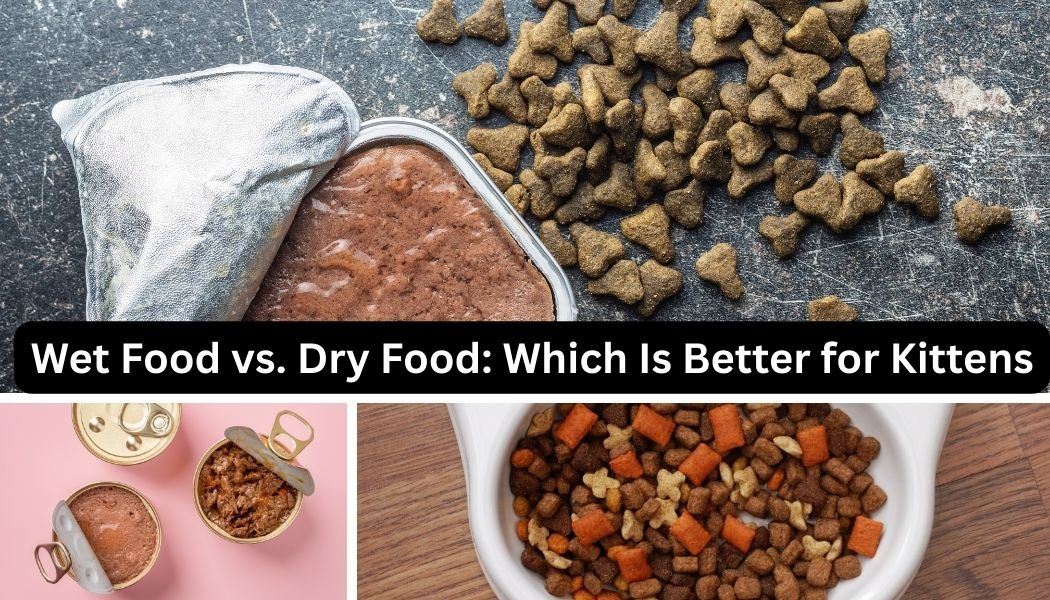
Table of Contents
Choosing the Best Nutrition: Wet Food vs. Dry Food for Your Growing Kitten
Choosing the right food for your kitten can be overwhelming, especially when the debate around wet food vs. dry food seems never-ending. I remember when I first brought home my tiny furball; I scanned countless labels, compared nutrition charts, and even asked my vet a dozen questions. Kittens grow fast, and their dietary needs are critical in those early months. There are key differences between wet food vs. dry food: which is better for kittens is the question.
Did you know that nearly 60% of pet owners struggle to decide between wet and dry kitten food? It’s true. This article will break down the science, nutrition, practical feeding tips, and real-world pros and cons so you can confidently choose the best option for your kitten’s health, hydration, dental care, and long-term well-being.
Understanding Kitten Nutritional Needs
When I brought home my first kitten, I honestly thought food was food. If it said “complete and balanced” on the bag, I figured we were good. Turns out, that was a rookie mistake. Kittens aren’t just tiny cats; they’re basically little growth machines, and their nutritional requirements are on a whole different level.
I learned that the hard way after noticing my kitten seemed constantly hungry, even though I was feeding what I thought was enough. A quick deep dive into feline nutrition opened my eyes to how specific kitten diets really are.
Why kitten’s nutritional requirements are different than adult cats
Kittens grow at an insane pace during their first year. In the first 8–12 weeks, body weight can double or even triple. That kind of rapid growth demands higher protein, higher fat, and more calories per pound of body weight compared to adult cats.
Adult maintenance formulas are designed to prevent weight gain. Kitten food is designed to fuel growth. Big difference.
Protein requirements for kittens are significantly higher because muscle tissue, organs, skin, and fur are all being built from scratch. I once tried transitioning a kitten to adult food too early, around 8 months, thinking I was being proactive. Within weeks, energy levels dipped, and weight gain stalled. It was subtle, but noticeable.
Lesson learned: Most kittens should stay on kitten-specific formulas until around 12 months of age. Growth doesn’t stop just because they “look” grown.
Essential nutrients for growth (protein, fats, vitamins, minerals)
If there’s one thing I wish more new cat owners understood, it’s this: protein quality matters more than fancy packaging. Look for named animal proteins, like chicken, turkey, or salmon, as the first ingredient.
Kittens require high levels of animal-based protein to support lean muscle development. The Association of American Feed Control Officials (AAFCO) recommends a minimum of 30% protein on a dry matter basis for growth, but many quality kitten foods go higher. That’s not overkill, that’s fuel.
Fat is another big one. Healthy fats provide energy and support nutrient absorption. DHA (docosahexaenoic acid), often sourced from fish oil, plays a major role in brain and vision development. I didn’t even know to look for DHA at first. Now it’s non-negotiable.
Then you’ve got minerals like calcium and phosphorus. These are critical for bone growth, but they have to be balanced properly. Too much calcium can cause skeletal issues in growing kittens. It’s not just about adding more; it’s about correct ratios.
Taurine? Essential. Cats can’t produce enough on their own. A deficiency can lead to heart problems and vision issues. It’s scary how quickly problems can develop if this amino acid is lacking.
How diet influences the immune system, bone development, and brain health
I noticed something interesting when feeding a higher-quality kitten formula: fewer digestive upsets and stronger energy levels. It wasn’t magic. It was nutrition doing its job.
A well-formulated kitten diet supports the immune system through antioxidants like vitamin E and vitamin C. Zinc and selenium also play a role in immune response. When kittens are weaning and exposed to new environments, immune support matters more than people realize.
For bone development, it’s all about that calcium-to-phosphorus balance. Ideally, it should sit around 1.2:1 to 1.4:1. That balance supports proper skeletal formation without overstressing growing joints.
Brain health is influenced heavily by DHA and arachidonic acid. Kittens fed adequate levels often show sharper learning responses, faster litter box training, and quicker adaptation to routines. It’s subtle, but it’s there.
Importance of calories and digestibility in kitten formulas
Here’s something I totally underestimated: calorie density.
Kittens have tiny stomachs. They physically can’t eat large volumes at once, so their food needs to be calorie-dense. If the food is too low in calories, they won’t meet their energy needs, no matter how often they eat.
Digestibility is just as important. Highly digestible protein and fat sources mean nutrients are absorbed efficiently instead of being wasted. I once switched to a budget brand during a tight month, and litter box output increased dramatically. That’s usually a sign that nutrients aren’t being fully utilized.
A good kitten formula should provide concentrated energy, high bioavailability, and minimal fillers. Corn gluten and vague “meat by-products” were used in some of the cheaper foods I tried early on. The difference in coat shine, stool consistency, and energy was obvious once I upgraded.
Bottom line? Feeding a kitten isn’t just about filling a bowl. It’s about fueling growth, immunity, skeletal development, and cognitive function during the most important stage of their life.
And once I truly understood that, I never looked at kitten food the same way again.
What Is Wet Food?
I’ll be honest, when I first started buying kitten food, I thought wet food was basically “cat soup in a can.” I didn’t pay much attention to the ingredient list, moisture percentage, or how it was processed. If it smelled strong and my kitten devoured it, I assumed it was good stuff.
Over time, though, I realized wet food is way more nuanced than I gave it credit for. There’s actual science behind that little can.
Definition and typical ingredients
Wet food, also called canned cat food, is a high-moisture commercial diet formulated to be complete and balanced for either growth or maintenance. For kittens, you’ll usually see labels like “for growth” or “for all life stages,” which matters more than people think.
Typical ingredients include named animal proteins like chicken, turkey, beef, or salmon. Organs such as the liver are often included, which makes sense because in a natural prey model diet, organ meat is nutrient-dense and rich in vitamins like A and B12.
You’ll also see broth or water listed high on the ingredient panel; that’s intentional. Thickeners such as guar gum or carrageenan may be used to stabilize texture. Early on, I avoided anything I couldn’t pronounce, but I learned not every additive is evil. Some are simply there to hold the loaf together.
What I do avoid now are vague labels like “meat by-products” without a species name. Specificity usually equals higher quality.
Moisture content and texture
This is where wet food really separates itself from dry kibble. Moisture content typically ranges from 70% to 80%. Compare that to dry food, which has around 10% moisture, and it’s not even close.
That hydration factor is huge, especially for kittens who don’t always drink enough water on their own. Cats naturally have a low thirst drive, and I didn’t fully understand that at first. I used to wonder why the water bowl barely moved.
Texture varies a lot. You’ve got pâté, shredded, minced, chunks in gravy, and mousse-style formulas. I’ve learned texture preferences can be surprisingly strong. One kitten I cared for would only eat pâté. Anything with chunks was rejected, like it was offensive.
The softer texture also makes it easier for young kittens transitioning from mother’s milk to solid food. It was recommended to me by a vet to slightly mash or warm wet food during weaning, which definitely helped acceptance.
How wet food is manufactured (canned, pouch, fresh-like)
I used to think all wet food was just scooped into cans and sealed. It’s actually more technical than that.
Most canned and pouch foods are made by grinding meat and other ingredients into a slurry, blending in vitamins and minerals, then filling containers, sealing them, and cooking under high heat and pressure. That process, called retort cooking, sterilizes the food and makes it shelf-stable without preservatives.
Pouches are basically flexible versions of cans. Same cooking method, just different packaging.
Then there are “fresh-like” or refrigerated wet foods. These are minimally processed and often gently cooked, but they require refrigeration and have shorter shelf lives. I tried one once, thinking it would be superior across the board. It was good, but honestly, high-quality canned food holds its own nutritionally.
One thing I appreciate about canned food is that, because it’s sealed and sterilized, its nutrient profile is tightly controlled. It was designed to be complete, not just tasty.
Common flavors and protein sources
Walk down any pet food aisle, and you’ll see chicken, turkey, salmon, tuna, beef, duck, rabbit, and sometimes even lamb. Protein variety matters, especially if you’re trying to prevent food sensitivities down the road.
I rotate proteins when possible. It exposes kittens to different amino acid profiles and keeps meals interesting. Plus, if a sensitivity develops later, having protein options makes dietary changes easier.
Chicken is by far the most common and is usually well tolerated. Fish-based formulas tend to be strong-smelling, which kittens often love, but I avoid feeding fish exclusively due to potential mercury exposure and higher phosphorus levels.
One tip I picked up after a few messy mistakes: introduce new flavors gradually. Sudden switches caused digestive upset more than once. A 3–5 day transition blending old and new wet food works much better.
At the end of the day, wet food isn’t just “soft cat food.” It’s a high-moisture, nutrient-dense option that supports hydration, digestion, and growth when formulated properly.
And once I understood how it’s made and what’s inside it, I started choosing cans a whole lot more carefully.
What Is Dry Food?
I’ll admit it, dry food felt convenient from day one. Scoop it, pour it, done. No refrigeration, no spoon scraping a can at 6 a.m., no half-used tins staring at me from the fridge. It just seemed easier.
But once I started paying attention to ingredient lists, macronutrient breakdowns, and how kibble is actually made, I realized there’s a lot more going on in those little brown nuggets than I thought.
Definition and typical ingredients
Dry food, or kibble, is a low-moisture commercial diet typically containing around 6% to 10% water. It’s formulated to be complete and balanced for growth or maintenance, just like wet food, but the composition is very different.
Most dry kitten foods contain animal protein meals such as chicken meal or turkey meal. At first, I thought “meal” sounded inferior. Turns out, it’s actually a concentrated protein source because the moisture has already been removed. That can mean higher protein density per gram.
You’ll also see carbohydrate sources like rice, corn, barley, peas, or potatoes. This is where dry food really separates itself from wet formulas. Kibble requires starch to hold its shape, so carbohydrate levels are usually higher.
Fat sources like chicken fat or fish oil are added for energy and essential fatty acids. And of course, vitamin and mineral premixes are blended in to meet AAFCO growth standards.
One mistake I made early on? I didn’t compare protein percentages on a dry matter basis. A food that says 35% protein might sound great, but if carbs are pushing 35–40% too, that balance matters.
How dry kibble is created (extrusion process)
This part blew my mind when I learned it.
Dry kibble is made using an extrusion process. Ingredients are ground into a fine meal, mixed with water to form a dough, then pushed through an extruder under high heat and pressure. The mixture expands as it exits the machine, kind of like cereal being puffed, and is then cut into uniform pieces.
After that, the kibble is dried and often sprayed with fat or flavor enhancers to improve palatability.
That high-heat cooking process makes the food shelf-stable and kills pathogens. But it can also degrade some heat-sensitive nutrients, which is why synthetic vitamins are added back in afterward.
It was engineered for convenience and consistency. And honestly, that consistency is part of why many kittens transition easily to it.

Benefits of crunchy texture
I used to believe kibble cleaned teeth like a toothbrush. That claim gets thrown around a lot.
Here’s the reality: standard kibble doesn’t significantly reduce plaque unless it’s specifically designed as a dental formula. Most kittens just crunch once or twice and swallow.
That said, the crunchy texture does have some benefits. It provides mechanical stimulation for the gums and can help with teething discomfort in younger kittens. I noticed one kitten seemed to prefer kibble during that awkward teething stage, almost like it felt good to chew.
Another plus? Free feeding is easier with dry food. It doesn’t spoil quickly, making portion management easier in busy households. Though I learned the hard way that “free feeding” can turn into overeating if you’re not measuring.
And from a cost standpoint, dry food is typically more affordable per calorie compared to canned options.
Common protein sources and carbohydrate levels
Chicken is by far the most common protein source in dry kitten food. Turkey, salmon, and duck are also widely used. Some formulas combine multiple proteins to improve amino acid profiles.
However, carbohydrate levels in dry food are usually significantly higher than in wet food. While wet formulas might contain 5–15% carbs on a dry matter basis, dry kibble can range anywhere from 25% to over 40%.
Cats are obligate carnivores, so their metabolism is built primarily for protein and fat. That doesn’t mean carbs are toxic, but it does mean balance matters.
I try to look for dry kitten formulas with at least 35% protein and moderate fat levels around 18–22%. Lower carb options are out there, but they often cost more.
One thing I learned through trial and error: always monitor stool quality and coat condition when switching brands. When carbs were too high in one formula I tried, digestion seemed… off. It wasn’t dramatic, but it was noticeable.
Dry food isn’t inherently bad or automatically superior. It’s simply a different nutritional format, one built around shelf stability, convenience, and texture.
And once I understood how kibble is made and what it contains, I stopped judging it purely on price or packaging. I started looking at numbers. And that made all the difference.
Wet Food vs. Dry Food, Key Nutrition Differences
I remember standing in the pet food aisle staring at two bags, one canned kitten formula and one dry kibble, thinking, “They both say complete and balanced. So what’s the actual difference?”
That question sent me down a rabbit hole of guaranteed analyses, dry matter calculations, and more math than I expected to do over cat food. But once I broke it down, the nutritional differences became clear.
Water content comparison (hydration impact)
The biggest and most obvious difference is water content. Wet food typically contains 70–80% moisture. Dry food? Usually around 6–10%.
That gap matters. A lot.
Kittens naturally have a low thirst drive. They evolved from desert-dwelling ancestors, so they’re not big water drinkers. When I relied mostly on dry kibble at first, I noticed the water bowl barely changed. I assumed that was normal. It wasn’t ideal.
When I added wet food into the rotation, hydration improved without any effort. Urine output was more consistent, and litter clumps were noticeably larger. That’s not glamorous, but it’s data.
Hydration supports kidney health and urinary tract function long term. It’s one of those silent benefits that doesn’t show up immediately but absolutely matters.
Protein, fat, and carbohydrate content differences
Here’s where things get interesting.
On a dry matter basis (which removes water from the equation), wet food typically contains higher animal-based protein and fat percentages and much lower carbohydrate levels compared to dry kibble.
Many wet kitten foods run 45–55% protein on a dry matter basis. Carbohydrates often stay under 15%. Dry foods, on the other hand, commonly fall between 30–40% protein and 25–40% carbohydrates.
That carb difference exists because kibble requires starch to hold its structure during extrusion. Wet food doesn’t.
When I finally compared labels properly, not just the big bold percentages on the front, I realized one dry formula I’d used had nearly 38% carbohydrates. That’s not automatically harmful, but it’s significantly higher than what a carnivorous metabolism is built for.
Fat levels are comparable, though wet food often delivers fat in a more bioavailable form. And because protein in wet food is frequently sourced from fresh or minimally processed meat, amino acid integrity can be slightly better preserved.
Digestibility and nutrient density
This part surprised me the most.
Wet food is often more digestible because of its higher moisture content and lower starch levels. Nutrients are absorbed efficiently, and there is typically less scat output. I’ve seen it firsthand, smaller, firmer stools when feeding quality canned formulas.
Dry food can absolutely be digestible, but quality matters a lot. Lower-end kibble with high levels of plant protein or fillers tends to pass through the digestive system less efficiently. That’s when you see larger stool volume and sometimes an inconsistent texture.
Nutrient density is tricky. Wet food appears less calorie-dense per ounce because so much of it is water. But on a dry matter basis, the nutrients are concentrated.
It’s not that one is automatically “stronger.” It’s that they’re structured differently.
Calorie concentration and feeding amounts
This is where portion control gets real.
Dry food is calorie-dense. A single cup of kitten kibble can contain 350–450 calories, depending on the formula. That’s a lot packed into a small volume.
Wet food, because of its moisture, might contain 70–120 calories per 3-ounce can. So kittens need larger physical portions to meet energy needs.
I made the mistake once of feeding wet food based on volume instead of calorie calculation. My kitten wasn’t getting enough energy because I assumed “one can sounds right.” It wasn’t.
Now I always check the calorie content per can or per cup and calculate based on weight and age. Kittens generally need about 50–60 calories per pound of body weight daily during active growth. That number can shift, but it’s a solid starting point.
Dry food makes it easier to accidentally overfeed. Wet food makes it easier to underfeed if you don’t measure properly.
Neither is inherently better just based on calories. It comes down to understanding the concentration and adjusting portions accordingly.
When I finally understood these core differences, hydration, macronutrients, digestibility, and calorie density, the debate stopped feeling emotional and started feeling practical.
It’s not about picking a side. It’s about knowing what’s in the bowl and why it matters. And once you understand that, feeding decisions get a whole lot smarter.
Hydration and Urinary Health
I didn’t think much about hydration when I first started feeding kittens. Water bowl? Check. Food bowl? Check. Done, right?
Not exactly.
It wasn’t until I noticed one kitten straining a little in the litter box that I realized hydration isn’t just a “nice to have.” It’s foundational. And honestly, I wish someone had drilled that into me sooner.
Why is hydration essential for kittens
Kittens are growing fast, which means their metabolism is working overtime. Nutrient transport, temperature regulation, and digestion all depend on adequate fluid intake.
Water supports kidney function by helping flush waste products, such as urea and creatinine, from the bloodstream. Inadequate hydration forces the kidneys to work harder, and while kittens are resilient, that stress adds up over time.
Dehydration can sneak up quietly. Early signs like lethargy, dry gums, or slightly reduced skin elasticity are subtle. It can be missed if you’re not paying attention.
I learned to gently check hydration by lifting the skin at the scruff of the neck. If it snaps back quickly, that’s a good sign. If it tents or returns slowly, hydration may be low. It’s a simple trick that’s saved me stress more than once.
How wet food supports hydration
Here’s where wet food really shines.
With moisture content hovering around 75%, canned kitten food contributes significant fluid intake without the kitten having to drink extra water. It’s passive hydration.
When I added wet food as a daily staple instead of an occasional treat, I noticed litter box output changed, urine clumps were larger and lighter in color. That’s a positive sign of adequate hydration.
Cats don’t naturally compensate by drinking more when eating dry food. Their thirst drive isn’t strong enough. So even if a water bowl is full and fresh, intake often remains lower than ideal.
Wet food essentially builds hydration directly into the diet. And for kittens, especially during rapid growth, that extra fluid makes a noticeable difference.
Risks of dehydration with dry food
Dry food isn’t automatically dangerous. But relying exclusively on kibble does require more attention.
Since dry food contains only about 10% moisture, kittens must drink significantly more water to balance it out. Many don’t. It’s that simple.
Chronic low-grade dehydration can lead to concentrated urine. Concentrated urine increases the risk of crystal formation, particularly struvite crystals, which form more easily in alkaline urine.
I once fed primarily dry food for convenience and didn’t monitor water intake closely. It wasn’t long before urinary issues were suspected. That wake-up call completely changed my feeding approach.
Adding multiple water stations helped. So did using a circulating water fountain, which encouraged more drinking. But it still didn’t equal the hydration level achieved with wet food included.
Urinary tract health and diet connections
Diet plays a direct role in urinary tract health.
Water dilutes urine. Diluted urine reduces mineral concentration. Lower mineral concentration reduces the likelihood of crystal and stone formation. It’s basic chemistry, but it’s powerful.
Magnesium, phosphorus, and calcium levels in food also matter. A high magnesium content has been linked to struvite crystal formation. Quality kitten formulas carefully balance these minerals to support urinary pH in the ideal range, typically 6.0 to 6.5.
Protein sources can also influence urinary pH. Animal-based proteins generally promote a more acidic urine environment, which helps prevent certain crystal types.
I learned not to obsess over single nutrients but to focus on the overall formulation. Balanced minerals, adequate hydration, and high-quality protein work together.
Urinary issues are often blamed on one ingredient, but it’s usually a combination of hydration status and mineral balance.
After seeing how diet affects litter box patterns, urine concentration, and overall comfort, I stopped viewing hydration as optional.
It’s not just about preventing problems. It’s about supporting kidney function and urinary health from the start, before issues ever have a chance to develop.
And that peace of mind is worth the extra thought I put into the food bowl every single day.
Dental Health Considerations
I used to tell people, “Don’t worry, the kibble cleans their teeth.”
That line gets repeated a lot. Pet food marketing did a solid job convincing us that crunchy equals clean. But after dealing with plaque buildup way earlier than I expected, I had to admit, it’s not that simple.
Dental health in kittens isn’t something most of us think about until there’s bad breath involved. And by then, plaque has already been building for weeks.
Does dry food actually clean teeth?
Here’s the honest answer: standard dry food does very little to clean teeth.
Most kittens bite kibble once or twice and swallow. There isn’t enough chewing action to mechanically scrape plaque off the tooth surface. Unless the kibble is specifically formulated as a veterinary dental diet, with larger, fibrous pieces designed to resist crumbling, it’s mostly marketing.
I learned this after noticing visible plaque along the back molars of a kitten who had been eating mostly dry food. I thought the crunch would handle it. It didn’t.
True dental diets are engineered to create friction along the tooth surface before the kibble breaks apart. Regular kibble shatters too quickly to provide meaningful abrasion.
So no, dry food alone isn’t a toothbrush.
Plaque and tartar buildup in kittens
A lot of people assume dental disease is an “older cat problem.” It’s not.
Plaque starts forming within hours after eating. It’s a soft biofilm made of bacteria and food particles. If it isn’t removed, it hardens into tartar (calculus) within about 24–72 hours.
I was surprised how quickly yellowish buildup could be seen along the gumline, even in young cats. Kittens have baby teeth at first, but by about 6 months, permanent teeth are in place, and plaque doesn’t wait.
Inflamed gums, or gingivitis, can develop early if oral hygiene isn’t addressed. Redness along the gumline was the first sign I noticed. It wasn’t dramatic, but it was there.
Once tartar forms, it can’t be brushed off easily. It often needs professional dental cleaning under anesthesia. That’s not something I want to deal with if it can be prevented.
Benefits & limitations of dental chews and tooth brushing
Let’s talk solutions.
Tooth brushing is the gold standard. Period. It mechanically removes plaque before it hardens. I’ll be honest, starting was awkward. The first few attempts were… not smooth.
What helped was using a small finger brush and enzymatic cat toothpaste (never human toothpaste). Short sessions. Gentle praise. Consistency over perfection.
Even brushing three times per week makes a measurable difference.
Dental chews can help, but they’re supplemental. Some are formulated to reduce plaque through texture or added enzymes. They’re better than nothing, but they shouldn’t replace brushing.
Water additives are another option, though results vary. I’ve seen mild improvement in breath odor, but they don’t eliminate plaque on their own.
The biggest mistake I made was assuming one solution would handle everything. Dental care works best as a layered approach.
Wet food’s effect on oral hygiene
Wet food often gets blamed for causing dental disease because it’s soft and “sticks” to teeth.
Here’s what I’ve learned: wet food doesn’t cause plaque any more than dry food does. Plaque forms when bacteria interact with food particles, regardless of food texture.
The difference is that wet food doesn’t create the illusion of cleaning. It’s neutral in most cases.
Some kittens eating exclusively wet diets have excellent dental health when brushing is part of the routine. Meanwhile, I’ve seen dry-fed cats with heavy tartar buildup.
Diet alone doesn’t determine oral hygiene. Mechanical cleaning does.
If anything, wet food’s higher moisture content may reduce dry residue in the mouth. But it’s not a dental tool, and it shouldn’t be treated as one.
The big takeaway for me was this: no food replaces actual dental care.
Kibble isn’t a toothbrush. Wet food isn’t the enemy. Plaque doesn’t care what format you feed.
What matters is prevention, gentle brushing, regular gum checks, and catching small problems early. Once I shifted my mindset from “food handles it” to “I handle it,” dental health became way more manageable.
Growth and Development
Watching a kitten grow is wild. One week, they’re this tiny, wobbly fluffball, and the next, they’re launching themselves off furniture like a miniature athlete. That kind of rapid growth doesn’t just “happen.” It’s fueled directly by nutrition.
I learned pretty quickly that growth isn’t just about getting bigger, it’s about getting bigger at the right pace. Too fast can be just as problematic as too slow.
How diet influences growth rate
Kittens grow the fastest in the first 4–6 months of life. During that window, calorie needs are sky high, often around 50–60 calories per pound of body weight daily. That number surprised me the first time I calculated it.
If dietary protein and fat are too low, growth can stall. You might see slower weight gain, lower energy levels, or a dull coat. It’s subtle at first, and honestly, it was missed by me once because I assumed “small” just meant petite.
On the flip side, feeding excessively calorie-dense food without portion control can accelerate growth too quickly. Rapid weight gain puts strain on developing joints.
A balanced kitten formula is designed to support steady growth, not explosive weight gain. When I started weighing kittens weekly with a small digital scale, patterns became clearer. Tracking growth made feeding decisions less emotional and more data-driven.
Skeletal and muscle development
Bones don’t just grow longer. They mineralize and strengthen over time, and that process depends heavily on calcium and phosphorus balance.
The ideal calcium-to-phosphorus ratio in kitten food is generally around 1.2:1. Too much calcium can disrupt normal bone development. I didn’t realize how precise that balance needed to be until I read deeper into feline nutrition guidelines.
High-quality animal protein supports muscle growth. Muscle isn’t just aesthetic; it stabilizes joints and supports coordination. When protein intake is adequate, you see strong, lean muscle tone instead of soft weight gain.
I once switched to a lower-quality food during a budget crunch. Within weeks, muscle definition wasn’t as sharp, and energy dips were noticeable. It wasn’t dramatic, but it was there. Switching back improved things steadily.
Growth should feel sturdy, not puffy.
Managing healthy weight with kitten nutrition
This is where things get tricky.
Kittens need more calories than adult cats, but that doesn’t mean unlimited food is always ideal. Free-feeding dry kibble is common, but it can lead to overeating in some personalities. I’ve seen it happen.
Body condition scoring helped me a lot. You should be able to feel ribs easily without pressing hard, but not see them protruding sharply. There should be a visible waist from above and a slight abdominal tuck from the side.
If a kitten looks round from every angle, that’s usually excess fat, not just baby fluff.
I learned to adjust portions based on activity level. A super active kitten climbing everything in sight may need more calories than a calmer one. Feeding charts are starting points, not rigid rules.
Potential overfeeding risks
Overfeeding doesn’t just create a chubby kitten. It can influence long-term health patterns.
Excess weight during growth can stress developing joints, increasing the risk of orthopedic problems later in life. Fat cells formed in kittenhood can also influence adult obesity risk. That part really stuck with me.
I once assumed a slightly rounded belly was just a “cute baby phase.” It wasn’t. Cutting back slightly and increasing play sessions made a noticeable difference within weeks.
Rapid weight gain can also mask nutritional imbalances. A kitten may be gaining weight but not developing optimal muscle tone.
The key lesson I learned? Growth should be steady and proportional.
Not rushed. Not restricted. Balanced.
When nutrition is dialed in properly, with adequate protein, controlled calories, and balanced minerals, you see it. Strong posture. Smooth coat. Clear eyes. Consistent energy.
And honestly, there’s something really satisfying about knowing that the food in the bowl is directly supporting healthy development in all the ways that matter.
Cost and Convenience Comparison
I’ll be frank, the budget was one of the first things that influenced how I fed kittens. Not because I didn’t care about nutrition, but because when you’re staring at a cart full of cans versus one large bag of kibble, the math hits fast.
Over time, I stopped just looking at the price tag and started looking at cost per calorie, storage logistics, and how feeding style fit into daily life. That’s when the real comparison started to make sense.
Price differences between wet and dry food
On the surface, dry food almost always looks cheaper. A large bag might cost $40–$60 and can last for weeks, depending on portion size. When broken down per calorie, dry kibble is usually significantly less expensive than canned food.
Wet food adds up quickly. If a 3-ounce can costs $1.50–$2.50 and a growing kitten needs 2–3 cans per day, that’s easily $3–$6 daily. Multiply that by 30 days, and the monthly cost can double or triple compared to kibble.
I learned to calculate the cost per 100 calories rather than per bag or per can. That number tells the real story.
That said, cheaper isn’t always better. When I tried to cut corners once with a low-cost dry formula, I ended up dealing with digestive upset and eventually switching back. That wasted food and money in the long run.
Sometimes, a mixed feeding approach, part wet, part dry, balances both budget and nutrition well.
Storage, shelf life, and spoilage considerations
Dry food wins big on shelf life.
An unopened bag can last months, and even after opening, it stays fresh for about 4–6 weeks if stored properly in an airtight container. It’s convenient, no doubt.
Once opened, wet food should be refrigerated and used within 24–48 hours. And let’s be real, some kittens turn their nose up at cold leftovers straight from the fridge.
I’ve had cans go to waste because portions weren’t measured carefully. That adds to the cost quietly.
Spoilage is also faster with wet food if left out. After about 30–60 minutes at room temperature, it should really be discarded. Dry kibble can sit out longer without immediate issues, which makes it easier for busy schedules.
Storage space matters too. A case of canned food takes up more room than one bag of kibble. It seems minor, but in small kitchens, it’s noticeable.
Feeding on a schedule vs. free feeding
This part really changed how I approached convenience.
Dry food makes free feeding easy. You can leave a measured portion out, and kittens can graze throughout the day. For some, that works fine.
But free feeding can backfire if portion control isn’t strict. I once left out more than needed “just in case,” and the bowl was empty faster than expected. That’s how accidental overfeeding happens.
Wet food naturally encourages scheduled meals because it can’t sit out long. Feeding 3–4 smaller meals per day aligns well with a kitten’s metabolism anyway.
Scheduled feeding also makes it easier to monitor appetite. If a kitten suddenly refuses a meal, you notice it quickly. With free feeding, subtle appetite changes can be missed.
Convenience sometimes depends more on routine than on the type of food.
Travel and portability
When it comes to travel, dry food is undeniably simpler.
Pour it into a sealed container or bag, and you’re set. No refrigeration needed. No risk of leaks.
Wet food requires more planning. If you’re traveling overnight, you’ll need a cooler or access to a fridge. And hauling multiple cans isn’t exactly lightweight.
I once packed only wet food for a short trip and underestimated how much space it would take. Lesson learned.
That said, single-serve pouches make wet food more portable than it used to be. They’re lighter and easier to pack than traditional cans.
At the end of the day, cost and convenience are real factors. They matter. Feeding decisions don’t happen in a vacuum.
Dry food is generally more budget-friendly and easier to store. Wet food requires more planning and often costs more per month. But convenience isn’t just about price; it’s about how well the feeding method fits into your lifestyle without compromising nutrition.
Once I stopped viewing it as an all-or-nothing decision and started thinking in terms of balance, it got a lot easier to manage both the budget and the bowl.
Mixed Feeding, Best of Both Worlds?
For the longest time, I felt like I had to pick a side. Wet or dry. Team can or team kibble.
But after going back and forth and, honestly, overthinking it, I realized mixed feeding can be a really practical middle ground. It doesn’t have to be complicated. It just has to be intentional.
What mixed feeding is and how to do it
Mixed feeding means offering both wet and dry food as part of a kitten’s daily diet. That can look different depending on your routine.
Some people mix kibble and canned food in the same bowl. I tried that at first, but it made portion tracking harder. What worked better for me was feeding wet food at set meal times and offering measured dry food separately.
For example, one schedule that worked well was: wet food in the morning, a small measured amount of kibble midday, and wet food again in the evening. That way, hydration stays high, but convenience stays manageable.
The key is making sure both foods are labeled for growth or “all life stages” and are nutritionally complete. You don’t want one food diluting the nutrient profile of the other.
Balancing nutrition, hydration, and taste preferences
This is where mixed feeding really shines.
Wet food helps support hydration because of its high moisture content, around 75%. Dry food provides calorie density and can be easier to manage in multi-pet households.
I noticed appetite improved when variety was introduced. Some kittens genuinely enjoy the contrast in texture. One day they’re into pâté, the next they’re crunching kibble like it’s the best thing ever.
Rotating protein sources also became easier with mixed feeding. Chicken in the kibble, turkey or salmon in the wet food. That added variety can help reduce pickiness long term.
But balance matters. If wet food accounts for most of the calories, hydration benefits remain strong. If dry food dominates, hydration drops. I aim to keep at least 50% of calories from wet food when possible.
It doesn’t have to be perfect, just thoughtful.
Portion control and meal planning
This is where things can get messy if you’re not careful.
Calories add up quickly when combining foods. I once fed a full recommended serving of wet food and the full recommended serving of dry food. That was a math fail on my part.
Now I calculate total daily calorie needs first. If a kitten needs 300 calories per day, I might feed 180 from wet food and 120 from dry. Then I measure accordingly.
Reading the “calories per cup” and “calories per can” section on the label is non-negotiable. Guessing leads to overfeeding.
I also stick to consistent feeding times. Kittens thrive on routine. Three to four meals per day works well during active growth.
Planning ahead prevents the “oops, that was too much” problem.
Signs your kitten prefers one type over another
Kittens will absolutely tell you what they prefer.
If wet food is eaten first and kibble is left untouched, that’s a clue. If the opposite happens, they crunch kibble immediately and ignore the wet food; that’s another signal.
Texture preferences can be surprisingly strong. Some kittens dislike chunks in gravy but love smooth pâté. Others want crunch and only crunch.
Digestive response is also feedback. Loose stools after introducing a new type of food may mean the transition was too fast. Gradual changes over 5–7 days are usually smoother.
Energy levels, coat condition, and appetite consistency are the real indicators, though. If a kitten is growing steadily, maintaining a healthy body condition score, and showing strong energy, the balance is probably working.
Mixed feeding isn’t about being indecisive. It’s about flexibility.
You get hydration benefits from wet food, convenience from dry food, and a bit of variety to keep meals interesting. For me, it removed the pressure of choosing one “perfect” option.
It’s not magic. It still requires measuring, monitoring, and adjusting.
But when done thoughtfully, it really can feel like the best of both worlds.
Special Dietary Needs & Health Conditions
I used to think special diets were only for older cats. Kittens were supposed to be the “easy stage,” right? Just feed a quality growth formula and move on.
Then I dealt with persistent diarrhea that wouldn’t clear up. That’s when I realized not every kitten fits neatly into the standard feeding plan. Some need a little more detective work.
Special dietary needs aren’t rare. They’re just not always obvious at first.
Food allergies and sensitivities
True food allergies in kittens aren’t extremely common, but food sensitivities? Those show up more often than people realize.
I’ve seen signs like chronic soft stool, excessive scratching around the face and ears, and recurring ear debris. At first, I blamed the environment. Litter. Stress. Anything but food.
Protein is the most common trigger, usually chicken, beef, or dairy. Yes, dairy. Even though it’s in cartoons, most cats don’t tolerate lactose well.
The only reliable way to identify a food allergy is through an elimination diet. That means feeding a novel protein (like rabbit or duck) or a hydrolyzed protein diet for 8–12 weeks with zero treats or flavor variations. It’s tedious, but it works.
I learned the hard way that “mostly sticking to it” doesn’t count. Even small exposures can reset the process.
Weight management diets
It sounds strange to talk about weight management for kittens, but it happens.
Overfeeding during rapid growth can lead to excess fat gain. If a kitten’s body condition score creeps above ideal, ribs are hard to feel, and there is no visible waist, adjustments are needed.
Weight management diets are typically lower in calories and sometimes higher in fiber. However, I’m cautious about putting growing kittens on calorie-restricted diets without veterinary guidance. Growth requires energy.
Sometimes, simple portion adjustment and increased interactive play are enough. Measuring food instead of eyeballing it made a huge difference for me.
Prevention is easier than correction. Once fat cells multiply, they don’t disappear; they shrink.
Kidney or urinary issues
Kidney disease is uncommon in healthy kittens, but urinary issues can happen, especially in certain breeds or male kittens.
Diet plays a direct role here. Moisture intake affects urine concentration. Concentrated urine increases the risk of crystal formation, especially struvite crystals.
If urinary signs appear, such as straining, frequent small urinations, or blood in the urine, that’s an immediate veterinary visit. No waiting.
Some therapeutic diets are formulated to control mineral levels, such as magnesium and phosphorus, and to promote an ideal urinary pH. These aren’t random adjustments. They’re precise.
I once thought adding more water to food would solve everything. It helps, but it doesn’t replace a properly formulated urinary-support diet if one is medically indicated.

When to choose prescription or vet-formulated food
This is where I had to check my ego.
It’s tempting to believe you can “research your way” through any health issue. But prescription diets exist for a reason. They’re backed by controlled trials and strict nutrient profiles.
If a veterinarian recommends a prescription diet for urinary crystals, severe food allergies, gastrointestinal disease, or metabolic disorders, it’s not just a suggestion. It’s treatment.
Prescription foods often use hydrolyzed proteins (broken down so the immune system doesn’t recognize them as allergens) or tightly controlled mineral levels to prevent recurrence of urinary stones.
I once hesitated because of cost. Prescription diets are more expensive. But after dealing with repeat symptoms, I realized the cost of not following medical nutrition advice is higher, financially and emotionally.
That said, not every minor issue requires prescription food. Mild digestive upset can often be addressed with gradual diet transitions and high-quality kitten formulas.
The difference is this: if a condition has been diagnosed, especially one involving the urinary tract, immune system, or chronic gastrointestinal distress, vet-formulated food should be strongly considered.
What I’ve learned through experience is simple: nutrition is powerful, but it’s not guesswork when health issues are involved.
Sometimes regular kitten food is perfect. Sometimes targeted nutrition is needed.
The key is knowing when to manage and when to seek professional guidance. Once I stopped trying to handle every issue solo and started treating food as part of medical care when necessary, outcomes improved dramatically.
Tips for Transitioning Your Kitten’s Diet
If there’s one mistake I’ve made more than once, it’s switching food too fast.
It usually started with good intentions. Maybe I found a higher-protein kitten formula, or I wanted to move from dry kibble to more wet food for hydration. I’d get excited, pour the new food in the bowl… and then regret it 24 hours later when the litter box told a very different story.
Diet transitions matter. A lot more than people think.
How to switch foods safely
Kittens have sensitive digestive systems. Their gut microbiome, the balance of beneficial bacteria in the intestines, adapts to the food they’re eating. When you suddenly change that, it can throw everything off.
The safest way to switch foods is to do so gradually. That gives digestive enzymes and gut bacteria time to adjust to the new protein sources, fat levels, and carbohydrate content.
Even if both foods are labeled “kitten formula,” the ingredient composition can differ dramatically. A switch from chicken-based kibble to salmon-based wet food is a big shift for a small stomach.
I’ve learned that rushing rarely ends well. Slow and steady wins here.
Gradual transition timeline and steps
A 7-day transition works well for most healthy kittens. If they have a sensitive stomach, I stretch it to 10–14 days.
Here’s the simple breakdown I use:
- Days 1–2: 75% old food, 25% new food
- Days 3–4: 50% old food, 50% new food
- Days 5–6: 25% old food, 75% new food
- Day 7: 100% new food
If stools soften at any stage, I pause and hold that ratio for a few extra days before increasing the new food again.
When transitioning from wet to dry, I avoid combining textures into a soggy bowl. Instead, I adjust portions separately while tracking total calories.
Consistency matters more than speed.
What to do if your kitten refuses new food
Oh yes. This happens.
Kittens can be surprisingly stubborn about texture, smell, or even bowl placement. I once tried switching to a high-quality pâté that looked perfect on paper. It was sniffed, covered with imaginary dirt, and ignored.
If refusal happens, I don’t panic.
First, I warm wet food slightly in the microwave for 5–10 seconds (stirring well to avoid hot spots). Warming enhances aroma, which stimulates appetite.
If it’s dry food being refused, I mix a small amount of the old kibble dust into the new food. Familiar scent helps.
Another trick is offering small portions instead of a full bowl. Large servings can feel overwhelming. A tablespoon at a time works better sometimes.
But here’s the line I don’t cross: I don’t let a healthy kitten skip food for more than 24 hours without consulting a vet. Cats are not designed for prolonged fasting.
Monitoring digestive tolerance and stool quality
The litter box becomes your data center during a transition.
Healthy stool should be formed, moist but not mushy, and easy to scoop. Mild softening during a diet change can be normal. Persistent diarrhea is not.
I watch for:
- Sudden loose stool lasting more than 48 hours
- Mucus in stool
- Vomiting
- Excessive gas
- Reduced appetite
Energy level matters too. A kitten bouncing off walls as usual? Good sign. Lethargic and withdrawn? Time to reassess.
Hydration should also stay steady. When switching to dry food, water intake needs to be closely monitored.
One thing I stopped doing was changing multiple variables at once. New food, new treats, plus a new feeding schedule? That’s chaos. If something goes wrong, you won’t know the cause.
Now I change one thing at a time.
The biggest lesson I’ve learned with diet transitions is this: patience prevents problems.
Switch slowly. Watch closely. Adjust calmly.
Kittens thrive on stability, especially when it comes to their digestive system. And once I stopped rushing changes and started treating transitions as a process instead of a flip of a switch, mealtime got a whole lot smoother, and the litter box did too.
What’s Truly Best for Your Kitten’s Health and Growth?
Choosing between wet food and dry food for kittens doesn’t have to be stressful. Each option has unique advantages. Wet food supports hydration and is highly palatable, while dry food offers convenience, crunch, and cost savings. Many kitten owners find that a thoughtful balance of both provides optimal nutrition, hydration, and enjoyment.
Monitor your kitten’s health, consult your veterinarian, and adjust feeding as needed to keep your furry friend thriving. Dive in and start feeding with confidence.
Key Takeaways: Wet Food vs. Dry Food for Kittens
Core Insight
- Both wet and dry kitten foods can provide complete and balanced nutrition when formulated for growth.
- The best choice depends on hydration needs, feeding convenience, budget, and your kitten’s preferences.
- Many veterinarians recommend a combination feeding approach to maximize benefits from both food types.
Kitten Nutritional Requirements
- Kittens require significantly more calories, protein, and fat than adult cats to support rapid growth.
- High-quality animal-based protein supports muscle development and tissue repair.
- Essential nutrients include:
- DHA for brain and vision development
- Taurine for heart and eye health
- Calcium and phosphorus for bone growth
- Vitamins and antioxidants for immune support
- Kitten formulas should remain the primary diet until about 12 months of age.
Wet Food for Kittens: Main Benefits
Hydration Support
- Wet food contains 70–80% moisture, helping maintain proper hydration.
- Increased water intake supports kidney function and urinary tract health.
- Particularly beneficial for kittens that naturally drink less water.
Higher Protein and Lower Carbohydrates
- Wet foods typically contain:
- Higher animal protein levels
- Moderate fat levels
- Lower carbohydrate content
- This nutrient profile aligns well with a cat’s carnivorous metabolism.
Easy Digestion
- High moisture content improves digestion and nutrient absorption.
- Often results in smaller, firmer stools.
Palatability
- Strong aroma and soft texture often make wet food more appealing for picky kittens.
- Useful when transitioning kittens from milk to solid food.
Dry Food for Kittens: Main Benefits
Convenience
- Easy to store and serve.
- Does not spoil quickly when left in the bowl.
- Suitable for free-feeding in busy households.
Cost Efficiency
- Typically more affordable per calorie compared to wet food.
- Large bags provide longer feeding duration.
Calorie Density
- Dry food contains higher calories per serving, making portion sizes smaller.
- Helps kittens meet energy needs without eating large volumes.
Texture and Chewing
- Crunchy kibble provides mild gum stimulation during teething.
- Some dental formulas may help reduce plaque buildup.
Key Nutritional Differences
Moisture Content
- Wet food: 70–80% moisture
- Dry food: 6–10% moisture
Higher moisture intake helps support:
- Kidney health
- Urinary tract function
- Proper hydration
Carbohydrate Levels
- Wet food generally contains lower carbohydrates.
- Dry food requires starch during manufacturing, resulting in higher carb levels.
Digestibility
- Wet food often provides higher digestibility and nutrient absorption.
- Lower-quality dry foods may produce larger stool volume due to fillers.
Calorie Concentration
- Dry food: higher calories per cup
- Wet food: lower calories per can due to moisture content
Portion sizes must be adjusted accordingly.
Hydration and Urinary Health
- Cats naturally have a low thirst drive, increasing dehydration risk.
- Wet food supports hydration through built-in moisture.
- Chronic dehydration may increase risk of:
- Urinary crystals
- Urinary tract infections
- Kidney stress
- Balanced mineral levels and adequate water intake help maintain healthy urine pH.
Dental Health Facts
- Regular dry kibble does not significantly clean teeth.
- Plaque forms quickly regardless of diet type.
- Proper dental care should include:
- Tooth brushing
- Dental treats
- Veterinary dental checkups
- Diet alone cannot prevent dental disease.
Growth and Development Considerations
- Proper nutrition supports:
- Healthy muscle development
- Strong bone formation
- Brain and cognitive development
- Balanced minerals are essential to prevent skeletal issues.
- Calorie intake should support steady growth without excessive weight gain.
Recommended Feeding Strategy
Many veterinarians recommend mixed feeding for kittens.
Benefits of combining wet and dry food:
- Improved hydration
- Nutritional variety
- Convenience and cost balance
- Better acceptance by picky eaters
Example feeding approach:
- Wet food for hydration and high-quality protein
- Dry food for calorie density and convenience
Final Verdict
- There is no single “best” food type for every kitten.
- Wet food supports hydration and protein intake.
- Dry food provides convenience and calorie density.
- A balanced combination diet often delivers the best overall results.
FAQ Section
Is wet food or dry food better for kittens?
Wet food is often better for hydration and easier digestion because of its high moisture content. Dry food, however, is more convenient, cost-effective, and can support dental health through its crunchy texture. Many veterinarians recommend a combination of both to provide balanced nutrition, proper hydration, and variety in texture.
Should kittens eat wet food every day?
Kittens can eat wet food daily as long as it is specifically formulated for kittens and labeled as complete and balanced. Wet food helps support hydration, which is especially important for growing kittens. However, some owners choose mixed feeding (wet and dry) to balance cost, convenience, and nutritional benefits.
Can dry food cause dehydration in kittens?
Dry food alone does not automatically cause dehydration, but it contains significantly less moisture than wet food. Kittens eating primarily dry kibble must drink enough water to compensate for the lack of moisture in the kibble. If a kitten does not drink adequate water, the risk of dehydration and urinary issues may increase.
At what age can kittens eat dry food?
Kittens can begin eating softened dry food around 4 to 5 weeks of age during the weaning process. By 8 weeks old, most kittens can eat dry kibble comfortably. It’s important to choose a high-quality kitten formula that meets their increased calorie and protein needs.
Is mixed feeding better than feeding only wet or dry food?
Mixed feeding can provide the benefits of both wet and dry food. Wet food supports hydration and palatability, while dry food offers convenience and can be left out longer. When portioned correctly, mixed feeding helps maintain balanced nutrition and supports overall kitten growth and development.
Disclaimer: This blog post contains affiliate links