Skip to content
Table of Contents
Why Automatic Dog Feeders Are Changing the Way We Feed Our Dogs
Inconsistent feeding schedules can cause digestive and behavioral issues in dogs. I’ve seen this firsthand—busy mornings, late evenings, and suddenly your dog’s mealtime is unpredictable. That’s when automatic dog feeders help.
This guide to automatic feeders for your dog will help you. Whether you’re managing a hectic schedule, controlling portions, or supporting a dog with special dietary needs, this guide sets the stage for confident, informed decisions as we explore what feeder options exist and how they work.
What Is an Automatic Dog Feeder and How Does It Work?
When I first heard “automatic dog feeder,” I pictured a gadget that would break quickly. I was wrong. After using one—and making mistakes—I realized they’re simpler and more helpful than they sound. If you’ve ever forgotten a feeding time or overfilled a bowl by accident (guilty), you’ll appreciate their value.
At its core, an automatic dog feeder is just a tool that delivers food at set times without you standing there. That’s it. No magic. But once you rely on one for a few weeks, you notice how much smoother feeding routines become, both for you and the dog.
Definition of an automatic feeder for dogs
An automatic feeder for dogs stores dry kibble and releases pre-measured portions into a bowl on a set schedule. Most work only for dry food—something I learned after trying wet food. Wet food and automatic feeders do not mix well.
The whole point is consistency. Same time, same portion, every day. That routine helps with digestion, weight management, and behavior, even if you don’t realize it at first.
Basic components (hopper, timer, bowl, power source)
Every automatic feeder I’ve used has the same basic parts. The hopper, which is just the storage container for the food, usually holds anywhere from a few days to a couple of weeks’ worth of kibble. Clear hoppers are nice because you can see when you’re running low, which saves you from that “oh no” moment.
The timer or control panel is the feeder’s brain. Here, you set feeding times and portions. Some have simple buttons; others use apps, which can be buggy.
The bowl is fixed under the dispenser, and food drops into it. Power usually comes from a wall plug, batteries, or both. Dual power is underrated. When the power went out once, the feeder kept running off batteries, and that alone sold me.
How scheduled feeding mechanisms function
Scheduled feeding works through a rotating dispenser or sliding gate inside the feeder. At the programmed time, the mechanism turns or opens briefly, allowing a specific amount of kibble to fall into the bowl. It’s not perfectly precise, but it’s close enough for daily feeding.
Most feeders measure portions by volume, not weight. That’s important. A “cup” of kibble from one brand isn’t always the same calories as another. It was adjusted over time after I noticed my dog’s weight creeping up a bit.
Differences between gravity-fed and electronic feeders
Gravity-fed feeders don’t use timers or electronics. Food simply flows down as the bowl empties. They’re cheap and simple, but they don’t control portions at all. If your dog tends to overeat, gravity feeders are a bad idea.
Electronic feeders, on the other hand, release food at specific times and amounts. They’re better for portion control, weight management, and structured schedules. More parts can fail, sure, but the benefits usually outweigh that risk.
Common feeding capacities and portion ranges
Most automatic dog feeders hold between 10 and 30 cups of dry food. That usually covers anywhere from 3 days to 2 weeks, depending on feeding size. Portion sizes typically range from about 1/8 cup up to 1 or even 2 cups per meal, broken into increments.
Smaller dogs benefit from feeders with finer portion control, which means the machine can dispense smaller amounts each time. Larger dogs need bigger hoppers (food containers) and wider chutes, which are the pathways food travels through, so kibble doesn’t jam. Jams do happen, by the way, and when they do, it’s frustrating. But once you match feeder size to kibble size, problems drop off fast.
Overall, automatic dog feeders aren’t about being lazy. They’re about being consistent. And consistency, it turns out, matters more than I ever expected.
Benefits of Using an Automatic Feeder for Dogs
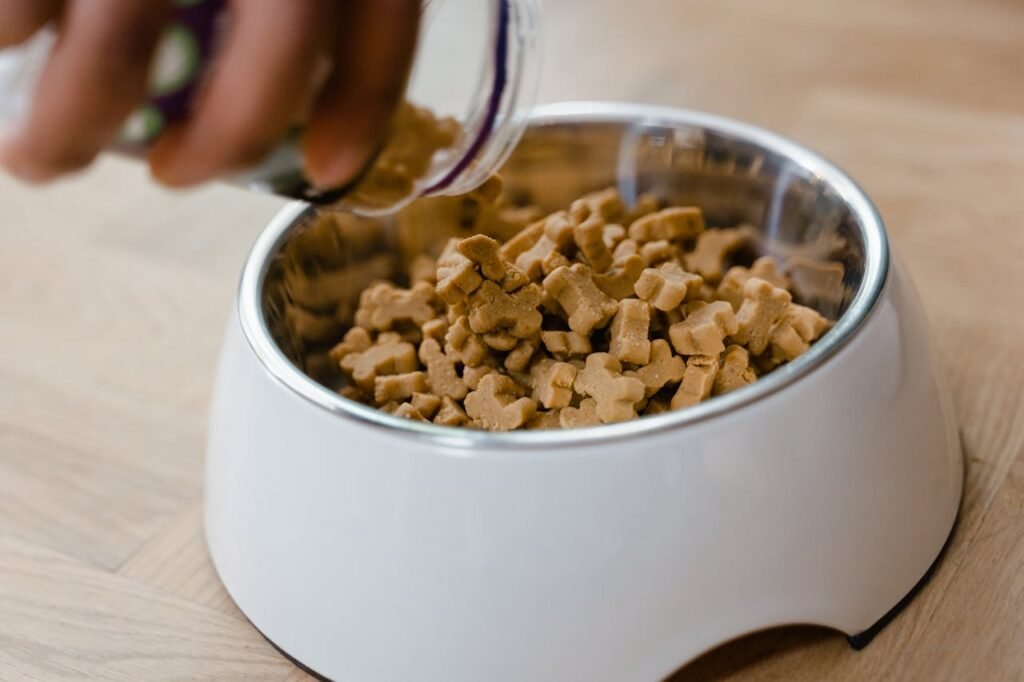
I didn’t switch to an automatic feeder because I wanted convenience at first. It happened because my feeding schedule was all over the place, and I kept telling myself it didn’t matter. Turns out, it mattered more than I thought. Once feeding became predictable, a lot of small problems quietly disappeared, which was kind of eye-opening.
The benefits didn’t show up overnight. They crept in slowly, and I only noticed them after a few weeks of not worrying about feeding times anymore.
Maintains consistent feeding schedules
Consistency is the biggest win here, hands down. Automatic feeders don’t forget, don’t sleep in, and don’t get distracted by meetings or errands. Food drops at the same time every day, even on weekends.
That regular schedule helped regulate digestion and bathroom habits more than I expected. It also removed the daily guesswork. Once the times were dialed in, it was set and forget, which felt weirdly freeing.
Helps with portion control and weight management
Portion control was where I messed up the most before using a feeder. Scoops get sloppy over time. A little extra here, a little extra there, and suddenly, weight gain sneaks up.
Automatic feeders dispense consistent portions every single time. Most feeders break meals into small increments, like 1/8 cup. After switching, weight stabilized within a couple of months without changing food brands. Calories were being controlled without constant measuring, which was a relief.
Ideal for busy owners and irregular work hours
If your schedule changes day to day, an automatic feeder is a lifesaver. Late nights, early mornings, or long shifts don’t throw feeding off anymore. Food still shows up on time, even if you don’t.
I used to rush home stressed about being late for dinner. That stress is gone. The feeder doesn’t care what time I walk through the door, and that peace of mind is huge.
Reduces begging and food-related anxiety
This one surprised me. When food comes from a machine instead of a person, the begging behavior drops fast. Dogs stop associating you with every meal.
Over time, pacing, whining, and staring at the food bin decreased. Feeding anxiety was reduced because meals were predictable. The feeder became the signal, not me, and that shift changed the whole vibe around food.

Supports dogs with medical or dietary restrictions
Automatic feeders are incredibly useful for dogs on special diets. Whether it’s weight loss, diabetes management, or portion-sensitive conditions, consistent meal timing matters.
Some feeders allow multiple small meals throughout the day, which helps stabilize blood sugar and digestion. Smaller, frequent meals were easier to manage this way. Mistakes still happen, but far fewer than when everything was done manually.
Looking back, the biggest benefit isn’t convenience. It’s control. Control over timing, portions, and routine. Once those were locked in, everything else got easier, and that’s something I didn’t expect going in.
Types of Automatic Dog Feeders Explained
When I started shopping for an automatic dog feeder, I assumed they were all basically the same. That assumption was wrong, and it cost me some time and money. Different feeder types solve very different problems, and picking the wrong one can feel like a total facepalm after a week of use.
I’ve either used or tested most of these styles over the years, and each one has its place. It really comes down to how much control you need and how complicated you want your setup to be.
Gravity-fed automatic feeders
Gravity feeders are the most basic option out there. There’s no programming, no power cord, and nothing digital. Food simply drops into the bowl as it empties, using gravity to keep it full.
They’re cheap and nearly impossible to break, which is nice. But portion control doesn’t exist here. If your dog eats out of boredom or stress, a bowl that’s never empty can lead to overeating quickly. I learned that lesson early and moved on. This type of feeder is not a good choice if you own a Labrador.

Programmable digital feeders
Programmable digital feeders are where things start to get practical. These use a built-in timer and motor to release food at specific times and in specific amounts. You punch in feeding times and portion sizes using buttons or a small screen.
They’re reliable once set up, though programming can be frustrating the first time. The portions are measured by volume, so testing a few cycles was necessary. Once dialed in, daily feeding became predictable and stress-free.
Smart Wi-Fi enabled dog feeders
Smart feeders take things a step further by connecting to Wi-Fi and controlling everything through an app. Feeding schedules, portion sizes, and even manual feedings can be done from your phone.
I liked being able to check food levels remotely, but Wi-Fi issues can mess things up. If the app went down, feeding would still be handled locally, which was reassuring. These feeders are great if you want visibility and control while away.
Feeders with voice recording features
Some automatic feeders allow you to record a short voice message that plays during feeding. At first, I thought this was kind of gimmicky.
Turns out, it actually helps some dogs adjust. Hearing a familiar voice when food drops reduced confusion and hesitation. It’s not essential, but for dogs who are cautious around new devices, it can make the transition smoother.
Multiple-pet automatic feeding systems
Multiple-pet feeders are designed to manage different diets or portions in the same household. Some use RFID tags or collars to allow only certain dogs access to specific bowls.
These systems are more expensive and require setup patience. But if you have dogs with different food needs, they’re a game changer. Food stealing was reduced almost immediately once access was controlled.
Choosing the right type of automatic feeder isn’t about buying the fanciest model. It’s about matching the feeder to real-life needs. Once that clicks, feeding stops being a daily headache and starts running quietly in the background, which is exactly how it should be.
Key Features to Look for in an Automatic Dog Feeder
When I first bought an automatic dog feeder, I didn’t really know what I should be looking for. I just picked the cheapest one that “did the job.” Big mistake. What I came to learn (after a couple of spilled meals and jammed chutes) is that some features matter way more than others, especially if you want reliable feeding and fewer surprises.
By focusing on the right features, you’ll end up with a feeder that runs smoothly and actually makes life easier instead of adding more little annoyances to your day.
Portion size accuracy and customization
This is a big one. If the feeder dispenses the wrong amount every time, what’s the point? Early on, I had a feeder that measured portions by volume, which sounds fine until you realize that kibble size varies between brands. A cup of tiny pieces isn’t the same calories as a cup of big chunky bits.
Look for a feeder that lets you adjust portion size in small increments, like 1/8 cup, 1/4 cup, and so on. That kind of customization makes weight management and precise feeding way easier. If your dog needs a special calorie count (for weight loss or medical reasons), fine-tuning portions matters.
Timer vs app-based scheduling
Timers are simple. You set times right on the unit, and it dispenses food when it’s supposed to. That’s reliable and works if you’re not into apps or tech in general.
App-based scheduling is cool because you can change feeding times from your phone, from anywhere. But apps can be glitchy or require constant internet. I’ve had days where the app wouldn’t sync, and I panicked a bit, only to realize the feeder’s internal clock still fired as scheduled. So both work, but decide whether convenience or simplicity matters more to you.
Food capacity and kibble size compatibility
Capacity matters depending on how much food your dog eats and how often you want to fill the hopper. If you’ve got a big dog eating 2–3 cups a day, a 10-cup hopper means weekly refills. That’s fine, but if you travel a lot, larger capacity is nicer.
Also, check the size of the kibble chute. Some feeders struggle with large, oddly shaped kibble, which can result in jams. My second feeder jammed constantly because the kibble was chunky. Once I upgraded to a feeder rated for larger kibble sizes, jams went away.
Power options (battery backup vs AC power)
Most feeders run off a wall plug, which is great, consistent power, and no surprises. But what happens during a power outage? That’s where battery backup is clutch.
One time, a storm knocked out power for hours, and the feeder kept going thanks to battery backup. If you’re gone during unpredictable weather, this feature is worth it. Some models run exclusively on batteries, which are fine for a weekend trip but pricey in the long term.
Anti-jam and anti-overeating mechanisms
Nothing’s more frustrating than a feeder that constantly clogs. Look for anti-jam designs like wide chutes, agitators, or augers that help move food down smoothly. These little details matter more than you think.
Anti-overeating mechanisms help too. Some feeders dispense slowly, so a greedy pup can’t just gobble everything in one drop. If your dog tends to inhale food, these systems can reduce digestive issues and food fights.
In the end, the features you choose should match your dog’s personality and eating habits. Spend a bit more time picking wisely, and your feeder will reward you with reliability, which is priceless when you’re busy or on the go.
Choosing the Right Automatic Feeder Based on Your Dog’s Needs
Picking an automatic dog feeder shouldn’t feel like choosing a random gadget off the shelf, because the wrong one can actually make feeding harder instead of easier. I learned that the hard way when I bought a “one-size-fits-all” feeder that wasn’t even close to fitting my dog’s eating style. Once I started thinking about size, behavior, and health needs, everything clicked. Let me walk you through how I’d approach this if I were you, like I’m talking to a friend who wants to do it right.
Best feeders for small dogs
Small dogs have small tummies and tiny mouths, so portion accuracy matters a ton. When I switched to an automatic feeder for my smaller buddy, I ended up regretting the first one; it was designed for big portions and didn’t let me dial down small enough. After swapping to a model with fine increments (like 1/8 cup or even smaller), it was night and day.
Look for feeders with smaller portion settings and lower capacity. Too big a hopper can mean food gets stale before it’s eaten, especially if your dog grazes throughout the day. Also, check the bowl height; little dogs get tired of stooping too far down.
Automatic feeders for large dog breeds
Big breeds eat big meals. That’s obvious, but it’s something you really feel only after a few days of refilling a tiny feeder twice a day. For larger dogs, I’d recommend something with a large hopper, think 20 cups or more. Those dual power options (AC with battery backup) are clutch if you’re away a lot.
Also, make sure the feeder’s chute is wide enough for larger kibble. A feeder that clogs becomes your daily headache, not theirs. Big dogs tend to have big appetites, so dispense reliability matters more than bells and whistles.
Solutions for dogs that eat too fast
If your dog eats as if you’d just announced free tacos in the backyard, slow-feed mechanisms are a lifesaver. Some automatic feeders come with portion drip or multiple small servings spaced out over minutes, which forces slower eating.
I had one greedy eater who would just inhale a full cup in about 3 seconds flat. Switching to a feeder that breaks that cup into 4–6 small mini-meals over 30 minutes not only slowed him down but actually improved his digestion. Trust me, your dog’s belly will thank you.
Feeders for puppies vs senior dogs
Puppies and senior dogs have pretty different needs. Puppies often need smaller, more frequent meals. Some automatic feeders let you schedule 4–6 meals a day, perfect for growing pups who can’t handle a big meal all at once.
Senior dogs, on the other hand, might benefit from an easily accessible bowl and consistent timing more than fancy features. If your older dog has arthritis, consider a feeder that can be placed at a comfortable height. One of the best decisions I made was elevating a feeder for my older dog, which reduced strain and encouraged smoother eating.
Special considerations for dogs on prescription diets
Prescription diets are non-negotiable for dogs with medical conditions like kidney disease or food allergies. If your vet has set strict portion sizes or feeding times, get a feeder that actually lets you program precise amounts and multiple daily times.
Some feeders let you use app controls to fine-tune portions or even manually feed a tiny extra if the vet changes the plan. That level of flexibility saved me during a long diet adjustment phase, when every meal counted.
Choosing the right feeder isn’t just about bells and whistles. It’s about matching the tool to your dog’s real habits and health needs. Once I started thinking this way, feeding became simple, predictable, and way less stressful for both of us.
Pros and Cons of Automatic Dog Feeders
I didn’t really think much about automatic dog feeders until I had one. Then, like most pet owners, I swung way too far into the “this gadget will change everything” mentality, which gave way to some real-world lessons once reality hit. After years of using different models and learning from mistakes (some messy), I finally have a balanced take on what these feeders do well, and where they fall short.
Here’s what I’d tell a friend who asked, “Are automatic feeders worth it?”
Advantages of automation and convenience
Let’s start with the obvious: automatic feeders are amazingly convenient. Before I had one, feeding was one of those small tasks that constantly got bumped down the list when life got busy. Work, errands, unexpected plans… all of it meant inconsistent meals, which eventually messed with digestion and temperaments.
Once the feeder was programmed, meal times became predictable, and that calm routine was a total game changer. No more guilt when I had to stay late at work, forgetfulness vanished, and portion control became way easier. Especially during travel or crazy weeks, automatic feeding helped keep my dog’s routine stable, which was huge for energy levels and behavior.
Plus, the ability to schedule meals (even multiple small ones) actually helped with weight management. My dog finally stopped begging at odd hours because the food always came on time. That alone was worth it.
Potential downsides and limitations
But let’s keep it real: automatic feeders aren’t perfect. First, portioning is usually measured by volume, not exact weight, which means if your kibble size changes, your dog’s actual calorie intake might too. I learned that the hard way after switching food brands and seeing a slight weight bump because the feeder didn’t adjust properly.
Then there’s the whole technology side. Timers can be confusing. Apps can glitch. Wi-Fi connections drop. I once panicked thinking the feeder wasn’t going to work, only to find out the app was just offline, while the feeder had already fed on schedule like a champ.
Mechanical issues are another thing. Jams happen. A stuck hopper can mean a missed meal, and if you don’t check on it right away, that’s trouble.
When automatic feeders are not recommended
Automatic feeders aren’t ideal in every situation. If your dog has very strict dietary needs that require weighing every morsel, a manual approach may be better. Also, dogs with aggressive food guarding or anxiety might fixate on the machine, and that can make problems worse.
For very young puppies who need constant supervision, relying solely on an automatic feeder isn’t wise. Puppies need social cues, guidance, and sometimes specific meal pacing that machines just can’t handle.
Also, if you’re gone long-term without someone to check in occasionally, errors can go unnoticed. A jammed feeder isn’t good for anyone.
Balancing automation with human interaction
Here’s the part people often miss: feeding isn’t just about calories and timing. It’s also about connection. Even with a feeder, I still make time for human-led meals a couple times a day. It reinforces training, strengthens trust, and keeps me in tune with how my dog is doing.
I use the feeder for regularity, but I still hand-feed treats during training and share quiet mealtime moments together. Automation isn’t meant to replace you; it’s meant to support you. When used right, it gives both of you more peace, less stress, and a well-fed pup without sacrificing bonding time.
In the end, automatic feeders are tools, awesome ones when chosen thoughtfully and used with awareness of their limits. They’re not magic, but they sure help make life easier.
Common Mistakes Dog Owners Make When Buying Automatic Feeders
I’ve made almost every mistake on this list, which is probably why I feel strongly about it. Automatic dog feeders sound simple, but a few small oversights can turn a helpful tool into a daily frustration. Most of these mistakes don’t show up on day one either. They creep in after a week or two, once real life kicks in.
If I could rewind and give myself advice before buying my first feeder, this is exactly what I’d say.
Choosing the wrong capacity size
This is probably the most common mistake. People either buy a feeder that’s way too small or absurdly large for their needs. I once bought a small-capacity feeder for a larger dog, thinking I’d just refill it more often. That got old fast.
Too small means constant refilling and a higher risk of missed meals. Too large means kibble sitting in the hopper for weeks, losing freshness. Match hopper size to daily intake and how often you realistically want to refill it.
Ignoring kibble compatibility
Not all kibble works in all feeders. This one got me good. Chunky or oddly shaped kibble can jam feeders that aren’t designed for it. When that happens, the feeder “runs,” but no food comes out.
Always check the feeder’s recommended kibble size range. If your food pieces are larger than 0.5 inches, you need a wider chute. Jams aren’t always obvious, and missed meals can happen quietly.
Over-relying on automation
Automatic feeders are tools, not babysitters. It’s tempting to assume everything is handled once it’s programmed. I did that once and didn’t notice a jam until much later.
You still need to check food levels, clean the bowl, and confirm the feeder is working. A quick daily glance avoids most problems. Automation works best when it’s supervised, even lightly.
Skipping battery backup features
This mistake feels minor until it isn’t. Power outages happen, and when they do, feeders without battery backup just stop. That means missed meals.
After one outage, I swore I’d never buy a feeder without battery support again. Dual power systems are worth every extra dollar, especially if you’re away during storms or outages.
Not accounting for multi-dog households
Single-dog feeders don’t always work in multi-dog homes. Food stealing becomes an issue fast. I underestimated how fast this would happen.
If dogs have different diets or eating speeds, look into feeders with RFID access or separate feeding stations. Otherwise, the feeder just feeds the fastest eater.
Most of these mistakes come from assuming all automatic feeders are the same. They’re not. A little planning up front saves you from frustration later and helps the feeder actually do what it’s supposed to do.

Maintenance, Cleaning, and Long-Term Use
Nobody gets excited about cleaning an automatic dog feeder. I sure didn’t. I figured dry food goes in, dry food comes out, so how dirty could it really get? Turns out they get dirtier than expected. Once I actually committed to basic maintenance, though, feeders worked better, lasted longer, and caused way fewer headaches.
This is one of those areas where a little effort up front saves a lot of frustration later.
How often should automatic feeders be cleaned
Most automatic feeders should be cleaned every 1–2 weeks, even if you’re only using dry kibble. Bowls should be washed more often, ideally every few days, because saliva and food dust build up fast.
I used to stretch cleanings longer than I should have. The result was sticky residue inside the chute and inconsistent portion drops. Once I stuck to a regular cleaning schedule, dispensing became smoother almost immediately.
Preventing mold and food buildup
Mold can happen, even with dry food. Moisture sneaks in through humidity, drool, or spilled water nearby. I once found clumped kibble inside the hopper and realized moisture had been the culprit.
To prevent this, always keep feeders away from water bowls and humid areas. Make sure everything is fully dry before refilling. Some people skip that step and regret it later. Food dust buildup should be wiped out regularly because it attracts moisture and slows down moving parts.
Tips to extend feeder lifespan
Longevity mostly comes down to basic care. Don’t overfill the hopper past recommended levels. Motors strain when there’s too much weight pressing down.
Use kibble sizes that match the feeder’s design. Clean moving parts gently, not aggressively. I learned that spraying water directly into the dispenser housing is a bad idea. Wipe instead. Also, replacing batteries before they die fully helps prevent power glitches that can mess with programming.
Troubleshooting common feeder problems
Jams are the most common issue. Usually, they’re caused by oversized kibble or buildup inside the chute. Clearing the blockage and switching food fixes it most of the time.
If portions suddenly change, recalibration is often needed, especially after cleaning. Timers drifting off schedule usually point to low batteries or power interruptions. When something goes wrong, it’s rarely mysterious. It’s usually something simple that got overlooked.
In the long run, automatic feeders are pretty low-maintenance, but they’re not zero-maintenance. Treat them like any appliance you rely on. A little attention keeps them running quietly in the background, which is exactly what you want.
Finding the Perfect Automatic Feeder for Your Dog
Choosing the right automatic feeder isn’t just about convenience; it’s about consistency, health, and peace of mind. By understanding feeder types, features, and your dog’s specific needs, you can confidently select an automatic dog feeder that supports better nutrition and a happier routine. Take the time to match the feeder to your lifestyle and your dog’s habits, and you’ll quickly see the benefits pay off.
FAQ Section
Are automatic dog feeders safe for everyday use?
Automatic dog feeders are safe when used correctly and chosen based on your dog’s size, eating habits, and diet. High-quality models include portion control, anti-jam mechanisms, and secure lids to prevent overeating or food tampering. Regular cleaning and proper setup ensure safe, long-term use.
Can automatic feeders help with dog weight management?
Automatic feeders allow precise portion control and consistent feeding schedules, which are critical for managing weight. By eliminating guesswork and overfeeding, they help dogs maintain a healthier body condition, especially when paired with vet-recommended portion sizes.
What type of automatic feeder is best for dogs that eat too fast?
For fast eaters, programmable automatic feeders with slow-dispense features or built-in slow-feed bowls work best. These feeders release food in controlled amounts, reducing the risk of choking, bloating, and digestive issues commonly associated with rapid eating.
Do automatic dog feeders work during power outages?
Many reliable automatic dog feeders include battery backup systems that continue functioning during power outages. This feature is especially important for maintaining feeding schedules when you’re away from home. Always check for battery backup before purchasing.
Can I use an automatic feeder if I have more than one dog?
It depends on your dogs’ behavior and feeding needs. Some automatic feeders are designed specifically for multi-dog households, while others may require separation during feeding to prevent food stealing. Microchip-enabled feeders are a great option for individualized feeding control.
Disclaimer: This blog post contains affiliate links